


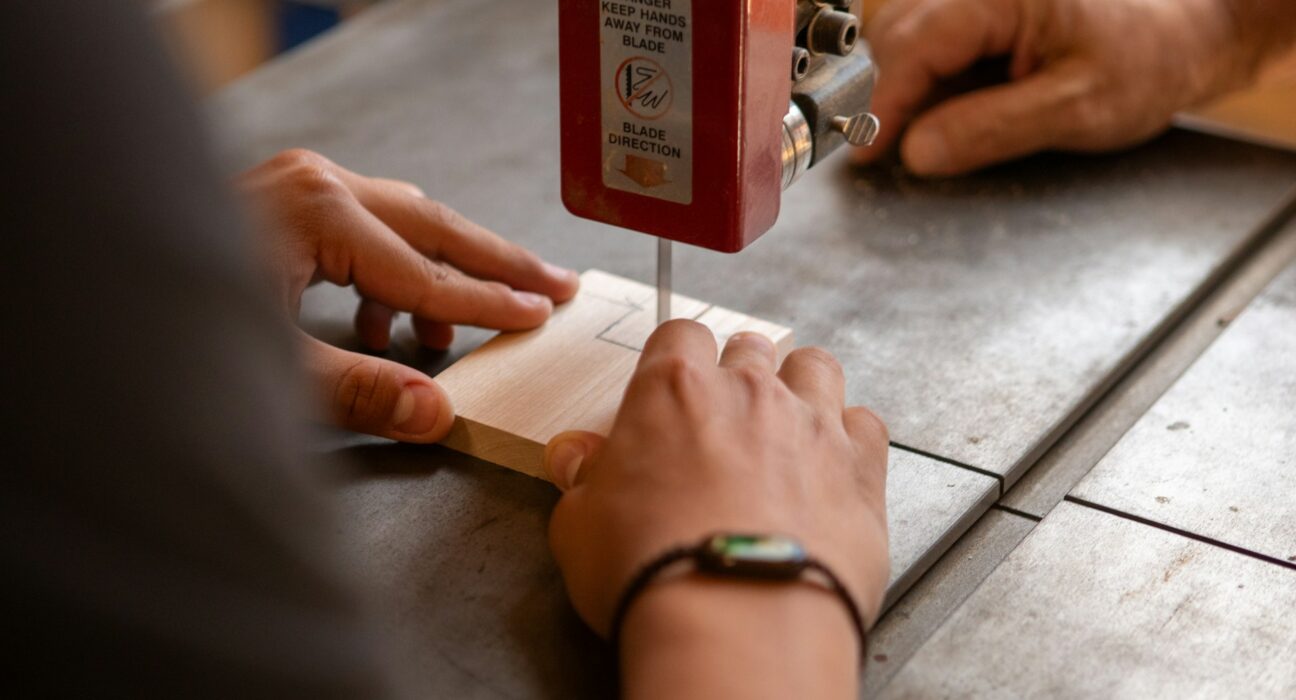
Walk into any well-equipped workshop, and you’ll find a band saw at the center of it. Few cutting tools match its versatility; it handles everything from thick steel billets to delicate furniture curves. But that versatility comes with a catch: the machine is only as good as the blade mounted on it.
Choose the wrong blade, and you’ll deal with rough finishes, broken teeth, premature wear, and wasted material. Choose the right one and your cuts become cleaner, faster, and far more consistent.
The problem is that blade selection involves several overlapping variables, tooth geometry, blade material, width, pitch, and the specific application at hand. This guide breaks all of it down. By the end, you’ll know exactly what to look for when selecting band saw blades for metal, wood, and specialty applications, and why each decision matters.
Why Blade Material Is Your First Decision
Before considering tooth count or blade width, start with the blade’s material composition. This single factor determines the range of materials you can cut and how long the blade will last under load.
The three most common options are:
- Carbon steel – The most affordable option and well-suited for cutting wood, plastics, and softer non-ferrous materials. Carbon blades are flexible and forgiving, making them a practical choice for general woodworking and furniture applications.
- Bi-metal – These blades combine a flexible carbon steel backing with high-speed steel teeth, making them far more durable than carbon-only blades. They handle interrupted cuts, vibration, and heat better, ideal for structural steel, tubing, and bundled stock.
- Carbide tipped – The premium tier. Carbide-tipped blades are engineered for tough alloys, stainless steel, nickel-based materials, and high-production environments. They cut faster and last significantly longer than bi-metal alternatives when working with hardened or abrasion-resistant materials.
Each material type serves a defined range of band saw applications. Matching blade composition to the workpiece material is the most fundamental step in the selection process.
Understanding TPI: The Teeth Per Inch Decision
TPI, teeth per inch, controls how aggressively a blade cuts and the quality of finish it produces. Higher TPI means finer cuts with smoother finishes. Lower TPI means faster, more aggressive material removal with a coarser result.
The general rule for metal cutting: maintain between 3 and 24 teeth in the cut at all times. To calculate how many teeth are engaged, multiply the blade’s TPI by the thickness of the workpiece in inches. For most metal cutting, 6 to 12 teeth in the cut is the target range.
Here’s how to apply that in practice:
- Coarse TPI (1.4/2.5 to 3/4): Best for thick solids, large structural beams, and high-volume production cuts where speed matters more than finish quality.
- Medium TPI (4/6 to 6/10): A versatile middle ground for general fabrication work, medium-wall tubing, and solid stock of moderate cross-section.
- Fine TPI (8/11 to 10/14): The right choice for thin-wall tubing, sheet metal, light profiles, and any application where a clean finish is critical.
- Variable pitch blades: If you regularly cut materials with varying wall thicknesses, variable-pitch options, such as 5/8 or 8/12 TPI, reduce vibration and chatter while broadening your effective cutting range.
Selecting the wrong TPI is one of the most common mistakes in blade selection. Too few teeth in the cut risks tooth stripping; too many causes heat buildup and premature dulling.
Cutting Metal: Bi-Metal vs. Carbide Tipped
Metal cutting is where blade selection has the greatest impact on performance and operating cost. Two blade types dominate this space, each suited to different production demands.
When to Choose Bi-Metal Blades
Bi-metal blades are the workhorse of most metal cutting operations. Their shock-resistant teeth handle interrupted cuts well, making them reliable for structural steel, I-beams, tubing, and bundled stock. For general-purpose steel cutting, blades with a positive rake angle, such as M42-grade options, deliver consistent results across a range of profiles and sizes.
For structural cutting specifically, the Challenger bi-metal series from M. K. Morse uses a specialized tooth profile designed to absorb heavy impact, dampen vibration, and prevent tooth stripping during demanding cuts. When cutting solids and structural materials at a higher performance level, Independence II is a premium bi-metal option worth considering.
When to Step Up to Carbide Tipped
For stainless steel, nickel alloys, tool steel, and high-alloy exotic materials, carbide-tipped blades are the better investment. The M-Factor GP carbide-tipped series, for example, delivers cutting speeds up to 20% faster than bi-metal equivalents and offers a substantially longer working life in tough production environments.
For aluminum, copper, and bronze, specialized carbide blades with aggressive tooth geometry, like the M-Factor HSN Carbide series, keep soft, gummy chips from clogging the gullets, which is a persistent problem when cutting non-ferrous materials at volume.
The cost-per-cut advantage of carbide becomes clear in high-production settings. A blade that costs more upfront but lasts three to five times longer is almost always the more economical choice.
Cutting Wood: Matching the Blade to the Task
Wood cutting introduces a different set of variables. Grain direction, density, and the type of cut, straight ripping versus tight curves, all influence blade selection. The key specs to consider are blade width, TPI, and tooth set.
Blade Width and Its Effect on Cut Radius
Blade width directly determines how tight a curve the blade can follow:
- Wider blades (½ inch and above): Better for straight ripping cuts and resawing thicker lumber. More surface contact means less blade deflection and straighter results.
- Narrower blades (⅛ to ¼ inch): Designed for curves and intricate shapes. Scroll work, furniture components, and decorative cuts all require a narrow blade with fine TPI.
Carbide vs. Carbon for Wood Applications
For general woodworking, carbon blades are cost-effective and widely available. They perform well on softwoods, hardwoods, and sheet goods.
Carbide-tipped wood blades, like the QuikSilver CT series, are the upgrade for resawing dense hardwoods, abrasive composites, and engineered wood products. Carbide holds its edge longer than carbon steel when cutting materials that generate significant friction or contain adhesive resins.
Specialty Applications: Grit, Die, and Pallet Blades
Not every workshop task fits neatly into the wood or metal category. Specialty blade types exist to handle materials that would quickly destroy a standard blade.
- Grit blades feature tungsten carbide grit bonded along the cutting edge rather than formed teeth. This makes them effective on materials that cannot be cut conventionally, fiberglass, cast iron, ceramics, tile, and reinforced composites. There are no teeth to strip or set, just a consistent abrasive surface.
- Die band blades are designed for die and mold work, cutting through hardened steel and precision tool materials. They operate at lower speeds and prioritize accuracy over material removal rate.
- Pallet dismantling blades are built to handle embedded nails, staples, and mixed debris without failing. A standard wood blade would lose teeth almost immediately under those conditions. Specialty pallet blades are reinforced to take the abuse without interrupting production.
Matching the blade type to the material isn’t just about performance, it’s about safety. Running the wrong blade on abrasive or hardened materials creates unpredictable stress and can lead to blade failure.
Breaking In a New Blade: A Step That Pays Off
One of the most commonly skipped steps in blade selection is the break-in process. New blades have sharp, angular tooth tips that are prone to micro-chipping under full cutting load. A proper break-in rounds those tips slightly, creating a more durable cutting edge that lasts significantly longer.
The process is straightforward:
- Reduce feed rate or pressure by 50% for the first cuts.
- Maintain blade speed (SFM) at the normal recommended setting, don’t slow the blade itself.
- Run through approximately 50 to 100 square inches of material at the reduced feed rate.
- Gradually return to full operating pressure.
This applies to bi-metal and carbon blades. Carbide-tipped blades do not require a break-in period due to the inherent hardness and geometry of the carbide teeth.
Skipping this step is a common reason blades fail early. A few minutes of reduced-rate cutting at the start can add hours of productive life to the blade overall.
Getting the Most Out of Your Blade Selection
Selecting the right blade is a starting point, not the finish line. How you use and maintain that blade determines whether you extract full value from it.
A few practices that consistently extend blade life and improve cut quality:
- Use cutting fluid on metal. Proper lubrication reduces heat buildup, which is the primary cause of premature tooth wear when cutting steel and stainless alloys.
- Check blade tension regularly. Under-tensioned blades deflect and produce wavy cuts. Over-tensioned blades fatigue the backing and crack prematurely.
- Match feed rate to the material. Pushing a blade too hard through hard material generates excessive heat and chips teeth. Too little feed rate work hardens materials like stainless steel, making subsequent cuts more difficult.
- Inspect blades before each use. Look for missing teeth, cracks in the backing, and uneven wear patterns. A damaged blade doesn’t just underperform, it poses a safety risk.
- Keep a TPI selection chart nearby. When blade selection decisions are made quickly under production pressure, having reference material reduces the chance of a costly mistake.
For more detailed guidance, M. K. Morse provides a Band Tooth Selection Guide and an Operators’ Guide to Band Sawing, both practical resources for shops that want consistent, documented selection criteria.
Put the Right Blade to Work
Every material, every cut, and every production environment has a blade built for it. The difference between a blade that struggles and one that performs comes down to making the right match—material composition, TPI, width, and tooth geometry all working together for the task at hand.
M. K. Morse manufactures its full range of band saw blades in Canton, Ohio, from bi-metal and carbide-tipped options for demanding metal cutting to carbon and specialty blades for wood and unique applications. Explore the complete lineup and find the right blade for your next job at mkmorse.com.